

Feng Shui in the Garden: A Space That Grows With You
Feng Shui in the Garden: A Space That Grows With You
For me, Feng Shui has never been about strict rules or striving for a “perfect” garden. It’s something much simpler—and far more personal: how a space makes you feel when you step into it.
I’ve noticed that my garden often mirrors what’s happening inside me. When life feels busy or overwhelming, the garden seems to echo that—paths feel cluttered, corners forgotten, the whole space a little heavier. But when I return to it with care and attention, something shifts. Not just outside, but within me too. A quiet sense of clarity begins to settle in.
Feng Shui, which means “wind” and “water,” is rooted in the idea of Chi—the life force flowing through everything. We may not see it, but we sense it immediately in how a place feels: calm or restless, inviting or uncomfortable. A garden, more than anywhere else, allows us to experience that flow directly.
Feeling the Flow: Chi and Clutter
Chi is the life force that makes a space feel alive, calm, or unsettled. It is often described as a subtle energy created by everything around us. The first thing I notice in any garden is how that energy moves—or doesn’t.
Spaces that are too straight, too exposed, or too tight can feel slightly uncomfortable, even if we can’t immediately explain why. At the same time, neglected corners or leftover clutter seem to hold energy in place, creating a quiet sense of stagnation.
Even clearing one small, forgotten area can shift the feeling of the entire garden.
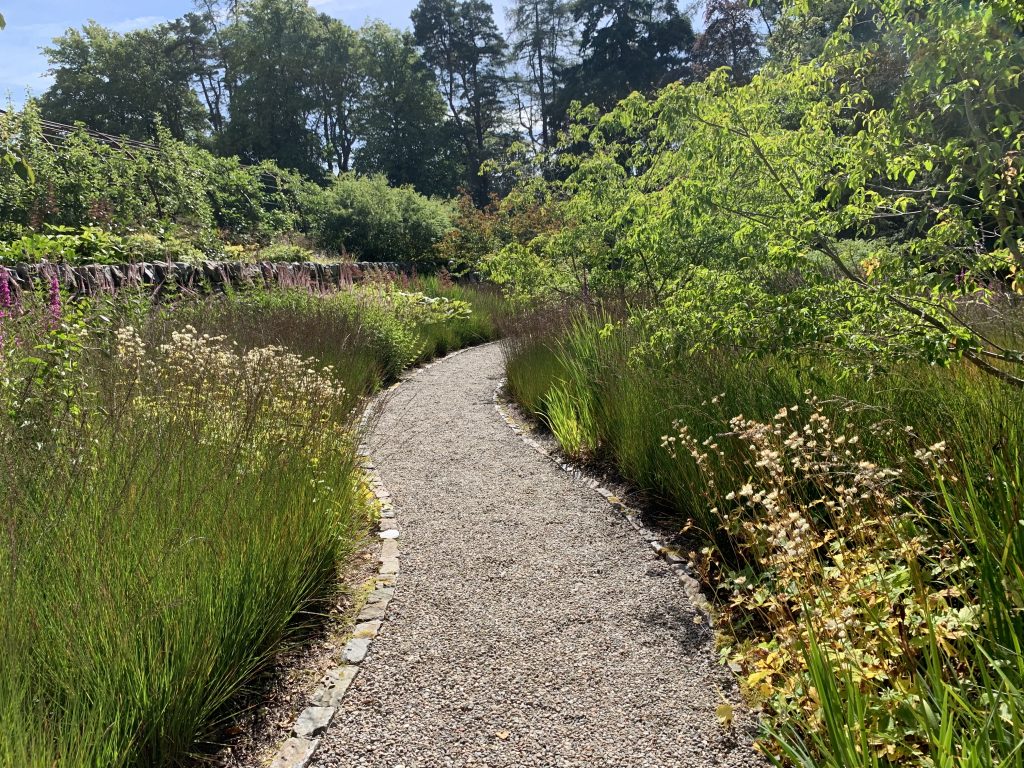
That’s why I naturally gravitate toward softer, more organic shapes. Curved paths, layered planting, and gentle transitions between areas invite energy to slow down. And when the space slows down, I do too. I begin to notice small things: the movement of light, the scent of herbs, the subtle sounds of life. These are the moments when the garden feels most alive.
Yin and Yang in the Garden
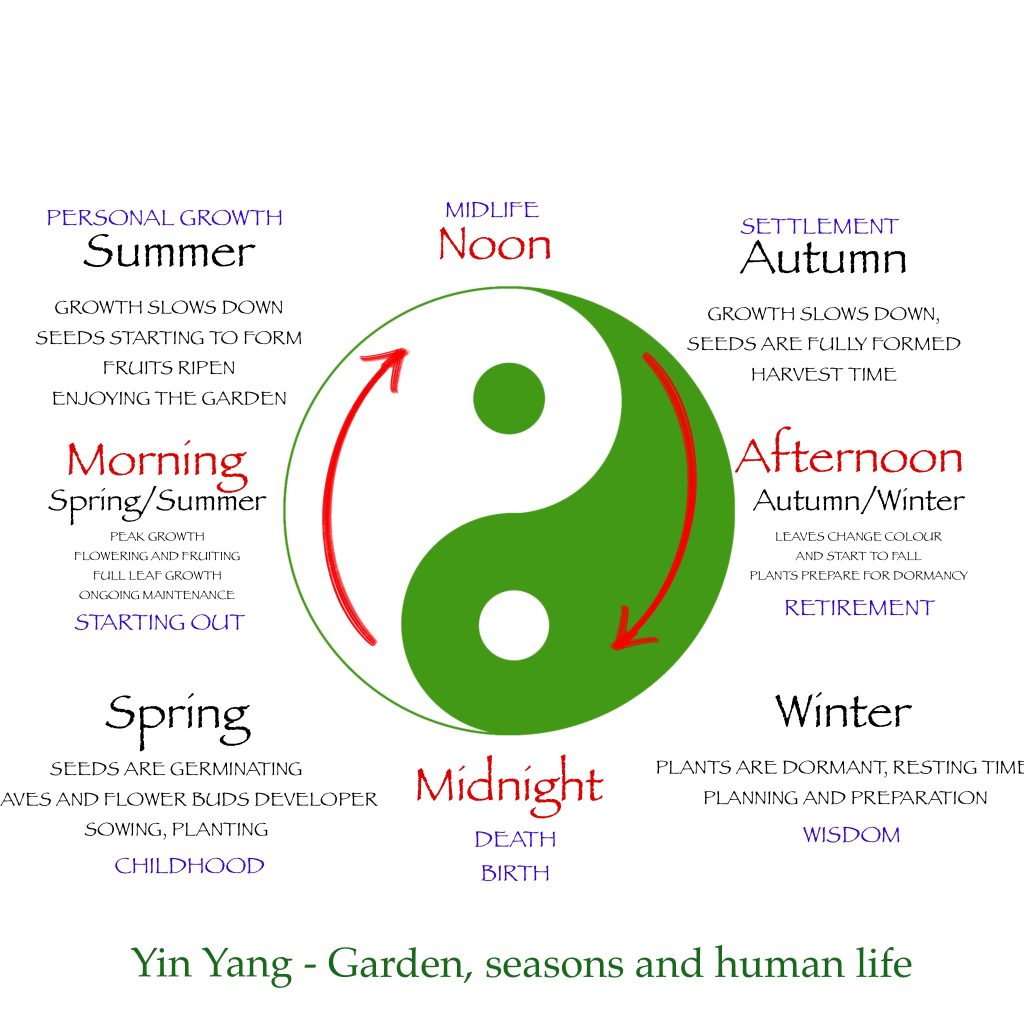
The garden is never still—it constantly moves between Yin and Yang, the complementary forces that shape all life. Yin and Yang describe the natural balance between opposite yet connected qualities: light and dark, activity and rest, warmth and coolness, outward energy and inward reflection. One cannot exist without the other, and harmony comes not from perfection, but from their balance.
Bright, active spaces draw me in—sunlit areas, open views, plants growing quickly. These carry Yang energy: expansive, energising, full of movement. Quieter corners—shaded, soft, and inward—hold Yin energy: calm, restorative, and reflective.
Chi flows differently through these spaces. Yang encourages action, play, and outward expression. Yin allows energy to settle, restore, and nourish. Observing these qualities in a garden is like watching the rhythms of life unfold.
This rhythm shifts naturally through time:
- Morning brings gentle Yang energy, building with the sun
- Midday is bright, active, and expansive
- Evening softens into Yin—slower and more reflective
The seasons follow a similar pattern. Spring and summer lean toward Yang; autumn and winter toward Yin. Even the moon reflects this movement—full moons expand energy, while new moons draw it inward.
Activities in the garden express Chi too. Digging, planting, pruning, and playing are Yang. Sitting, breathing, and simply being are Yin.
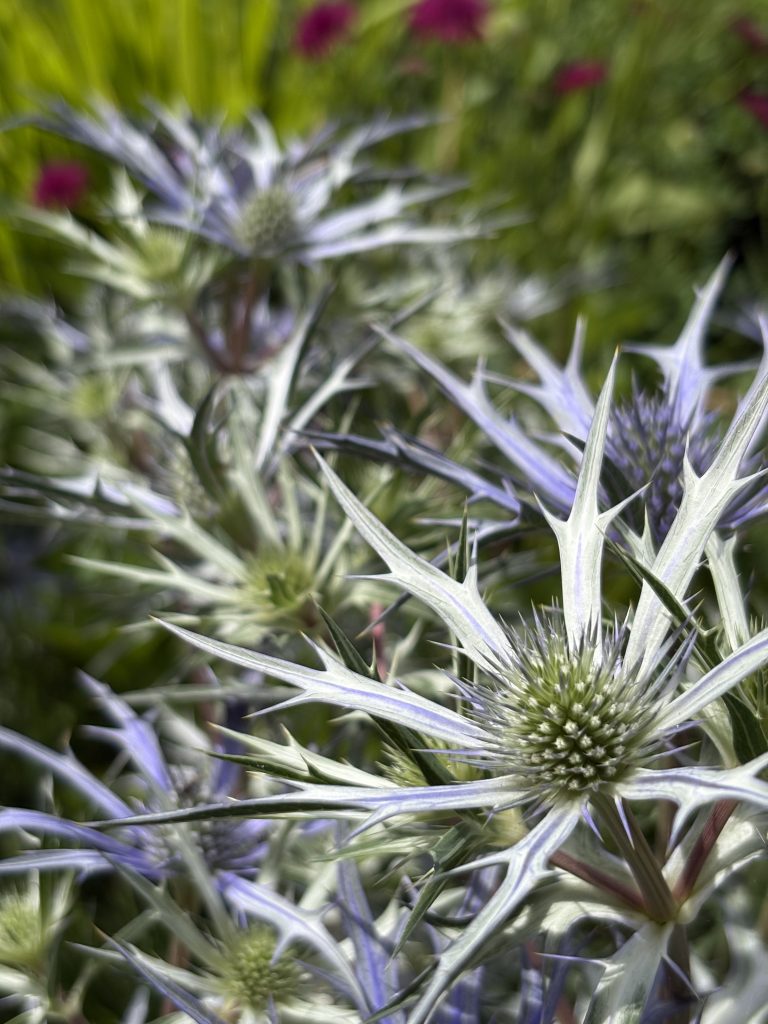
The plants themselves reflect this balance. Upright, structured forms energise. Soft, rounded shapes ground. Spiky plants can alert or activate, depending on how they are used.
Modern life adds subtle layers. Sunlight lifts energy instantly, while shade, soft lighting, and quiet corners allow it to settle without overwhelm. Paying attention to these sensations—and adjusting the garden accordingly—respects Chi’s natural rhythm.
Some days we seek Yang—energy, movement, activity. Other days we need Yin—quiet, calm, restoration. Watching the garden express these energies helps us move with that rhythm, rather than against it.

Mapping Your Garden: The Bagua
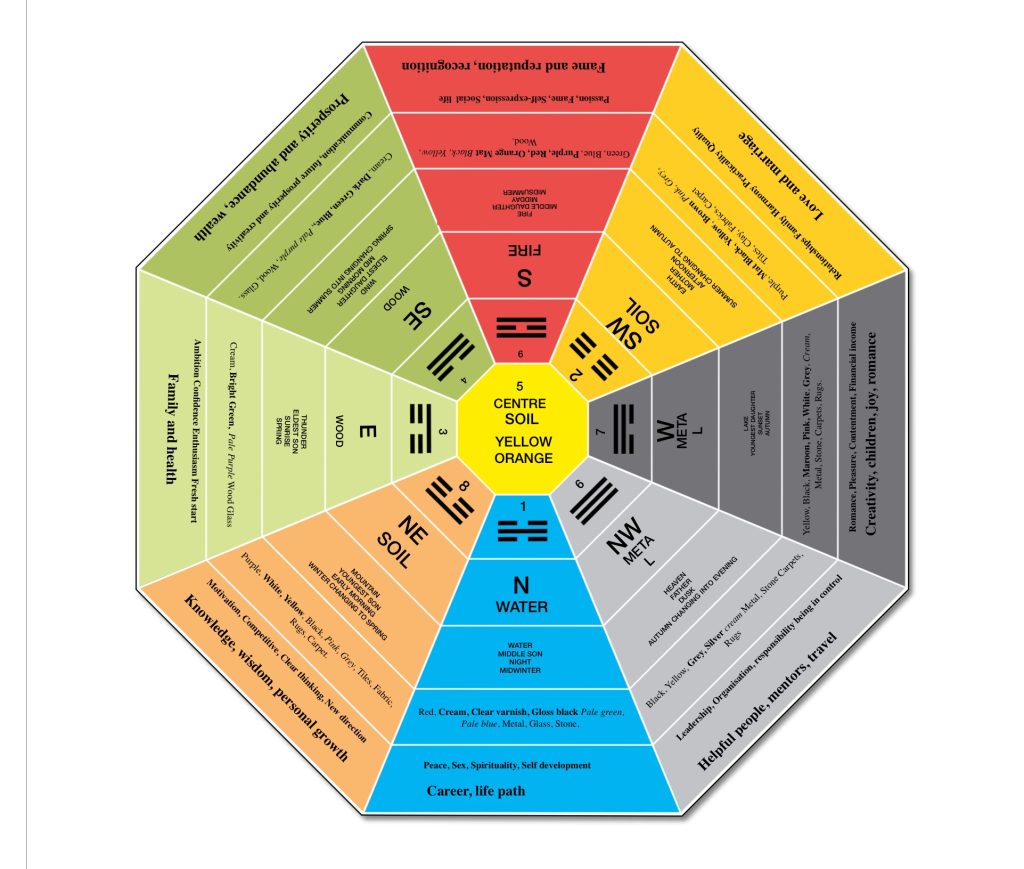
One simple way to connect more deeply with a garden is through the Bagua compass. Rather than seeing it as a rigid grid, I think of it as a gentle guide—one that highlights subtle connections between space and life.
For example, spending time in the eastern part of the garden may bring reflections on family. The northern area can feel more introspective—a place to pause, think, and reset.
Whether this is symbolic or energetic matters less than the experience itself. Small adjustments—a plant, a stone, or simply spending time in a particular corner—can begin to shift how the space feels.
Traditionally, the Bagua divides a space into eight directions, each linked to seasons, qualities, and elements. These directions reflect the movement of the sun and the natural cycles of life. By noticing the character of each area, we can gently support or soften its energy.
The Five Elements
The Five Elements are best understood not as rules, but as qualities or moods a space can hold. Each brings a different feeling into the garden:
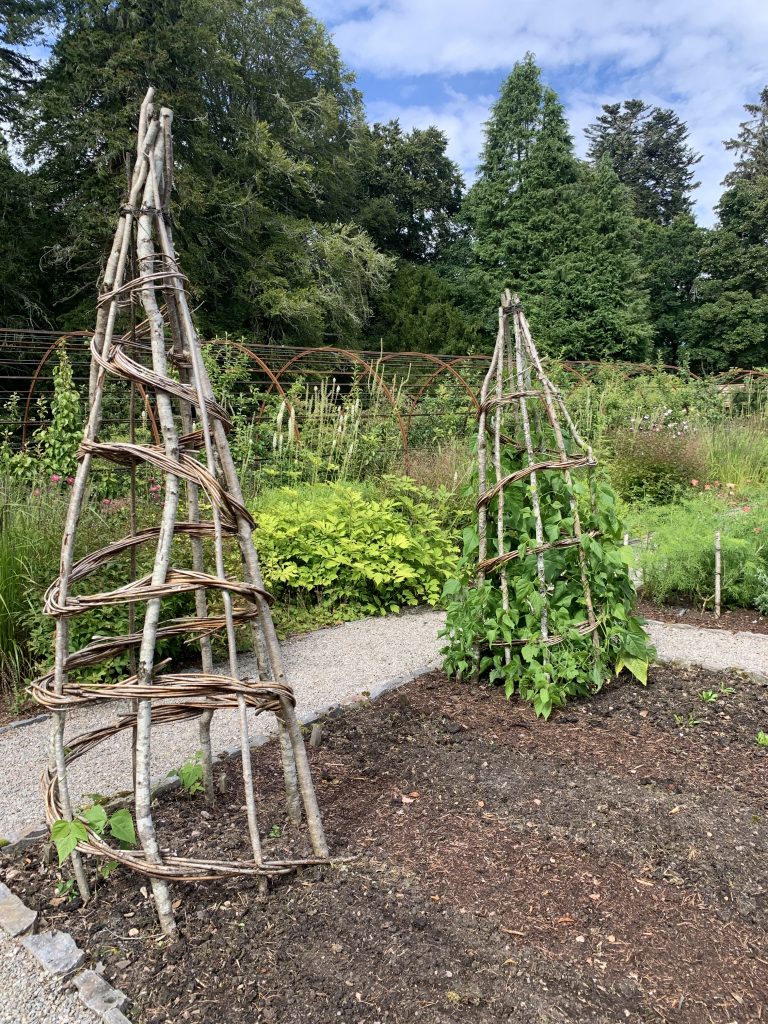
- Wood (East, Southeast): Growth and vitality. Greens, soft blues, and vertical shapes—trees, climbing plants, trellises—carry upward, expanding energy.
- Fire (South): Energy and expression. Reds, oranges, sunlight, and vibrant flowers create warmth and sociability.
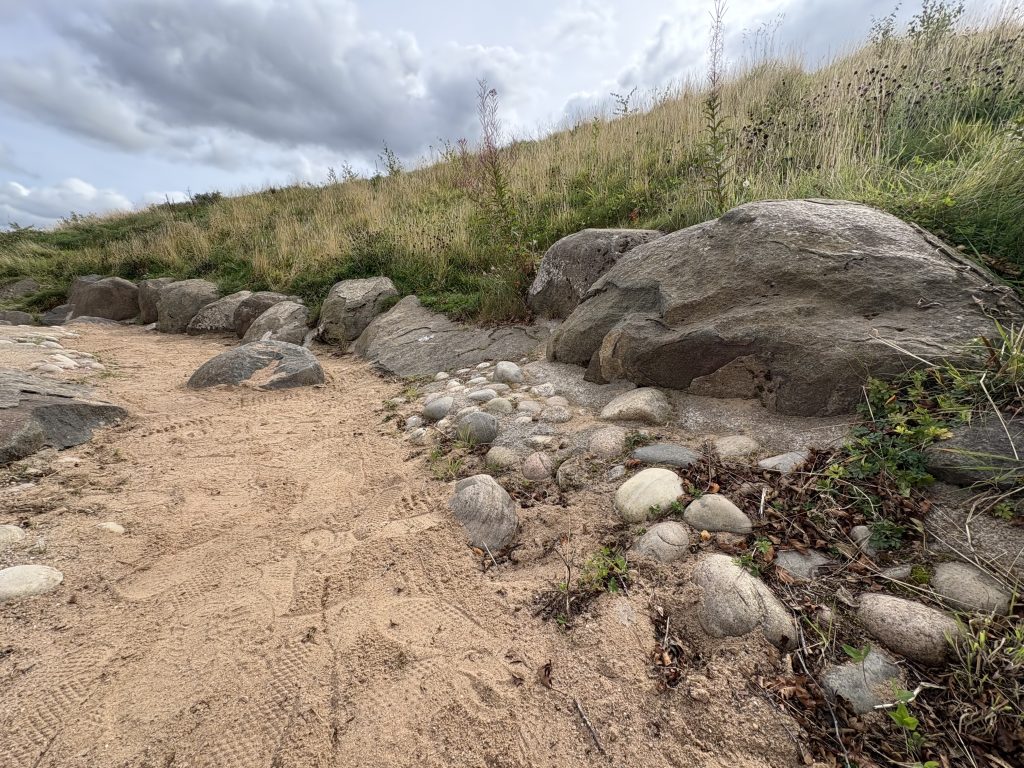
- Earth (Centre, Southwest, Northeast): Stability and grounding. Earthy tones, square shapes, stones, and low, solid forms bring calm and support.
- Metal (West, Northwest): Clarity and structure. Whites, greys, circular shapes, and simple ornaments offer refinement and focus.
- Water (North): Flow and intuition. Deep blues, dark tones, reflective surfaces, and curved shapes—ponds or gentle pathways—encourage ease and movement.
Balance doesn’t require perfection. Often, a subtle shift—a new shape, a touch of colour, a plant moved slightly—is enough to restore a sense of harmony.
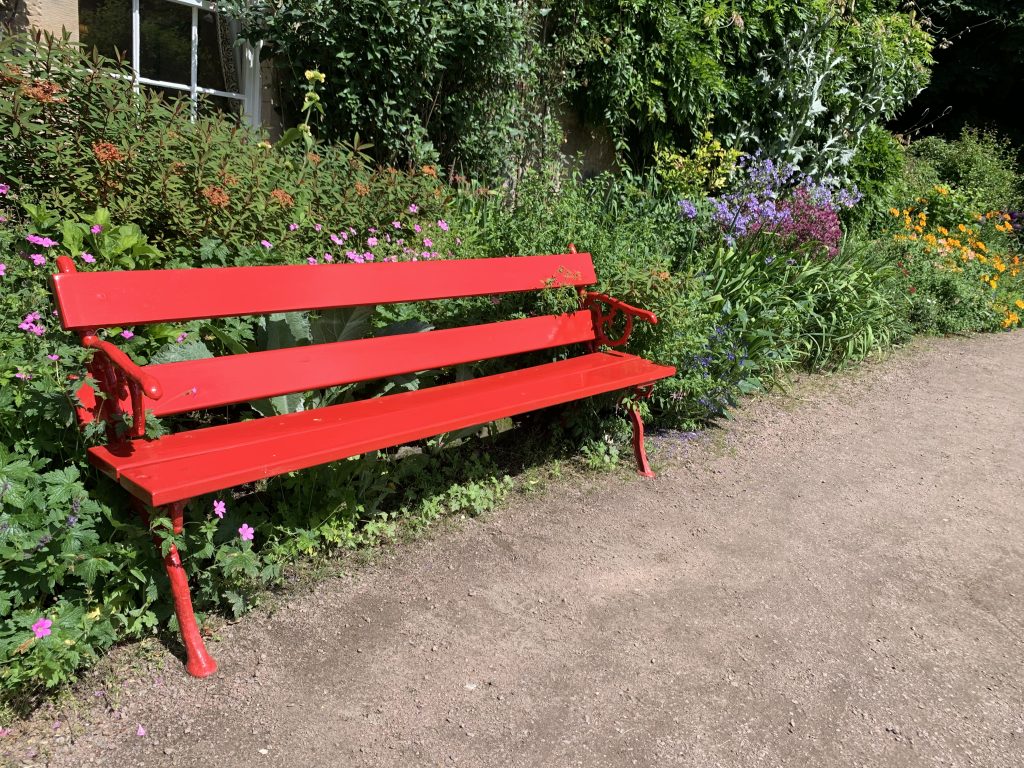
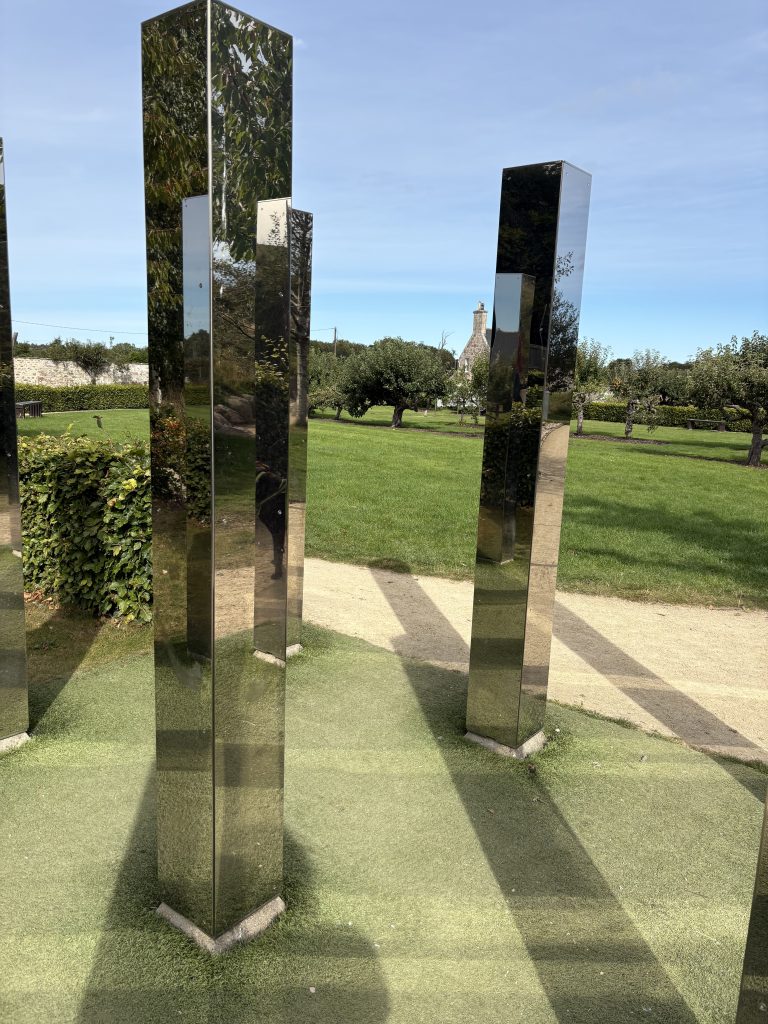
and interesting feature in the South
A Sense of Support: The Landscape Around You
One of the most powerful feelings a garden can offer is support—a sense of being held while remaining open to possibility.
I’ve noticed that when there is something solid behind me—trees, a hedge, a fence, or a wall—I feel more at ease. There’s a sense of protection and stability. At the same time, open space in front feels inviting, as if the garden is saying, “Come—something new can enter.”
Feng Shui expresses this through the Four Celestial Animals:
- Black Tortoise (North): Support behind you—trees, shrubs, fences, or elevation create grounding and protection.
- Phoenix (South): Openness ahead—clear views and welcoming space invite opportunity.
- Green Dragon (East): Growth and movement—taller plants and layered planting bring vitality.
- White Tiger (West): Calm strength—lower planting or still elements offer quiet balance.
Even small adjustments—a single tree, a line of shrubs, or where you choose to sit—can change how supported a space feels.
Everyday Spaces with Meaning
Even practical areas of the garden can carry intention.
A children’s play area brings lively Yang energy, often suited to the West (Creativity and Children) or South (Fire).
A greenhouse supports growth and renewal, making East or Southeast a natural fit.
A compost area reflects transformation and grounding energy, aligning well with Southwest or Northeast.
Small spaces for sitting, stretching, or breathing invite calm and reflection—often in the North, East, or the centre of the garden.
It’s not about perfect placement, but about noticing how each space feels and allowing it to support you naturally.
A garden doesn’t need to be large or elaborate. A few healthy plants, a place to sit, and a sense of care are often enough. What matters most is that the space feels good to you.
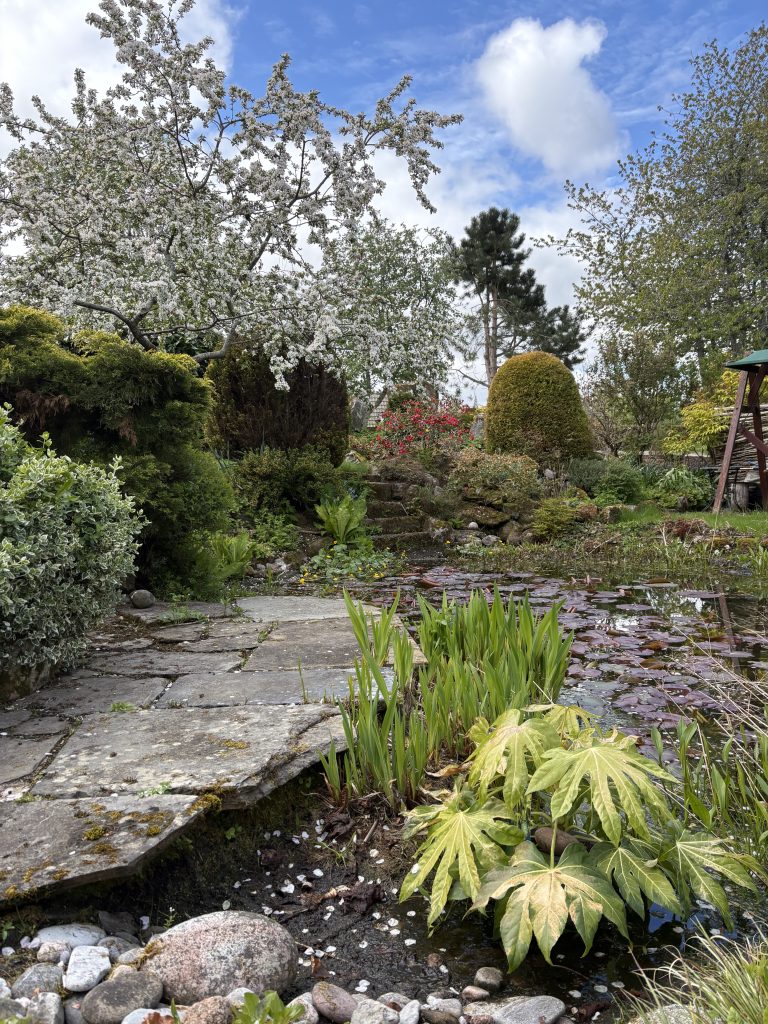
Feng Shui, at its heart, is about awareness—recognising how your surroundings affect you and responding to them. Over time, a cared-for garden becomes more than just an outdoor space. It becomes somewhere you can return to again and again—for calm, clarity, and quiet support.
And eventually, it stops feeling like something you designed—and begins to feel like something that grows with you.
You don’t need to follow every rule or understand every principle. Even small, intuitive changes can make a meaningful difference.
Trust what you feel.
That’s where balance quietly begins to take root.