
28. April 2026
I Don’t Need Silence: Finding Calm in a Sensory Garden in Inverness, Scottish Highlands
Introduction – What a Sensory Garden Means to Me
I have always dreamed of a sensory garden.
A sensory garden is deeply personal and subjective. It changes depending on who you are, what you need, and even the stage of life you are in. Our preferences evolve over time—what soothes us today may not be what we need tomorrow.
Someone living in a fast-changing environment, with a demanding job, constant noise, and people around all day will likely seek a completely different kind of relaxing garden space than someone who spends most of their time alone or in a quiet office. Age matters too—young, middle-aged, elderly—our needs shift constantly. And then there are individual conditions such as ADHD, autism, depression… it is all far more complex than it may seem.
Still, I would like to describe my ideal sensory garden design, shaped by life in Inverness, in the Scottish Highlands, where nature is never far away.
Life, Noise, and the Need for a Calm Garden Space
I have spent most of my life in nature, ever since childhood. Do I want to escape it after work? No—quite the opposite. The difference is that during work, I don’t really have time to experience nature. I don’t hear the subtle sounds around me because I’m focused—consulting, coaching, measuring, or maintaining a garden.
Then there is everyday life: grocery shopping, school runs, household duties, working from home. It never really stops.
And I need a pause.
Honestly, I long for just one hour a week in a calm garden space for wellbeing. Alone. No artificial noise, no phone.
Why Silence Doesn’t Work in My Sensory Garden
Silence? Not quite. Silence actually makes me a little uneasy.
I prefer familiar natural sound—an essential part of any sensory garden for mental health and wellbeing.
The sound of the river outside my home in Alness is a constant, gentle hum. It is always there, and it soothes me. I long for birdsong, the rustling of bamboo leaves, and the soft trickle of water from our small feature—a simple pot turned into a miniature pond.
Is it used? Yes. I often see a pigeon standing beside it, so I know it is appreciated. The solar pump is not very strong—it creates more of a gentle bubbling than a steady flow. I’ve promised myself many times to upgrade it, but I don’t like waste, so I’m waiting for it to stop working naturally. Strangely, that very cheap pump has survived two winters in the Scottish Highlands climate.
Sound in a Sensory Garden – Water, Wind and Movement
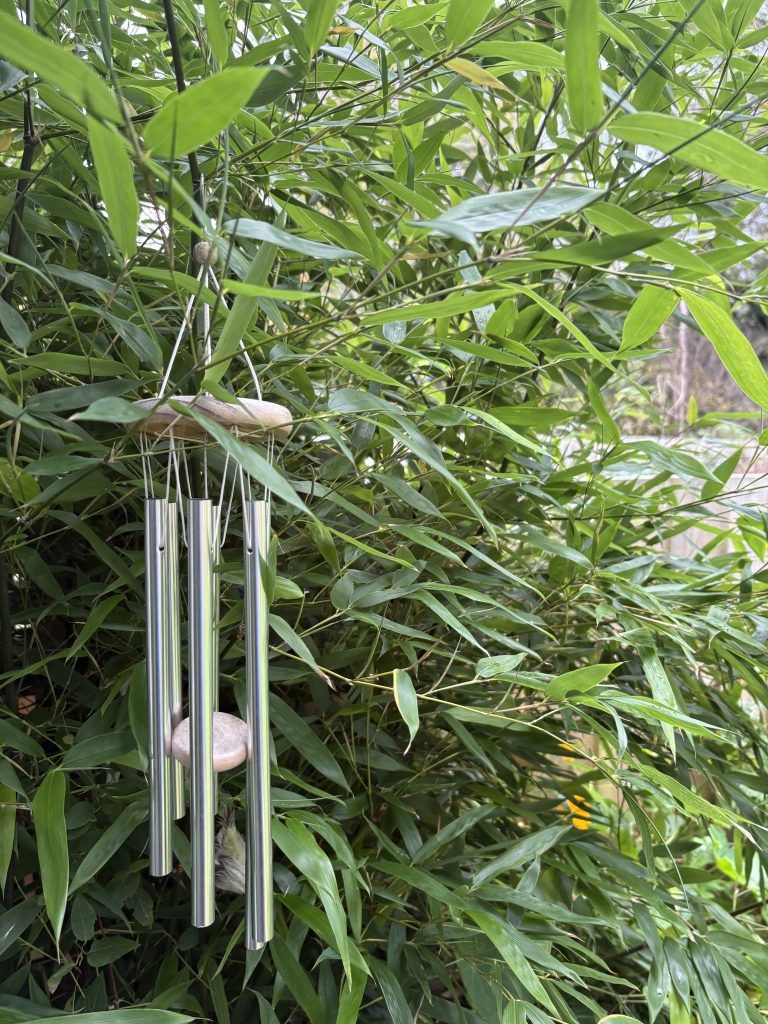
My wind chimes are among my favourite elements in this sensory garden idea for relaxation.
The deeper-toned ones move occasionally in a stronger breeze, creating a refreshing sound—perfectly balanced, not too high, not too low. It’s true what they say: when choosing a wind chime, go with the one that resonates with you.
I also have two others. A very small, delicate one hangs from a bamboo branch near the back door—I can barely hear it. Another, made of bamboo, hangs on the gate, creating a woody sound every time I enter the garden. It feels like a welcome. Not constant—just enough.
Sometimes I play my tongue drum. Whenever I need energy or emotional reset, I sit and play. It feels like meditation and mindfulness practice in a therapeutic garden space. I cannot think about anything else—I have to focus completely.
Sensory Garden Ideas: Scent, Memory and Wellbeing
I love scent.
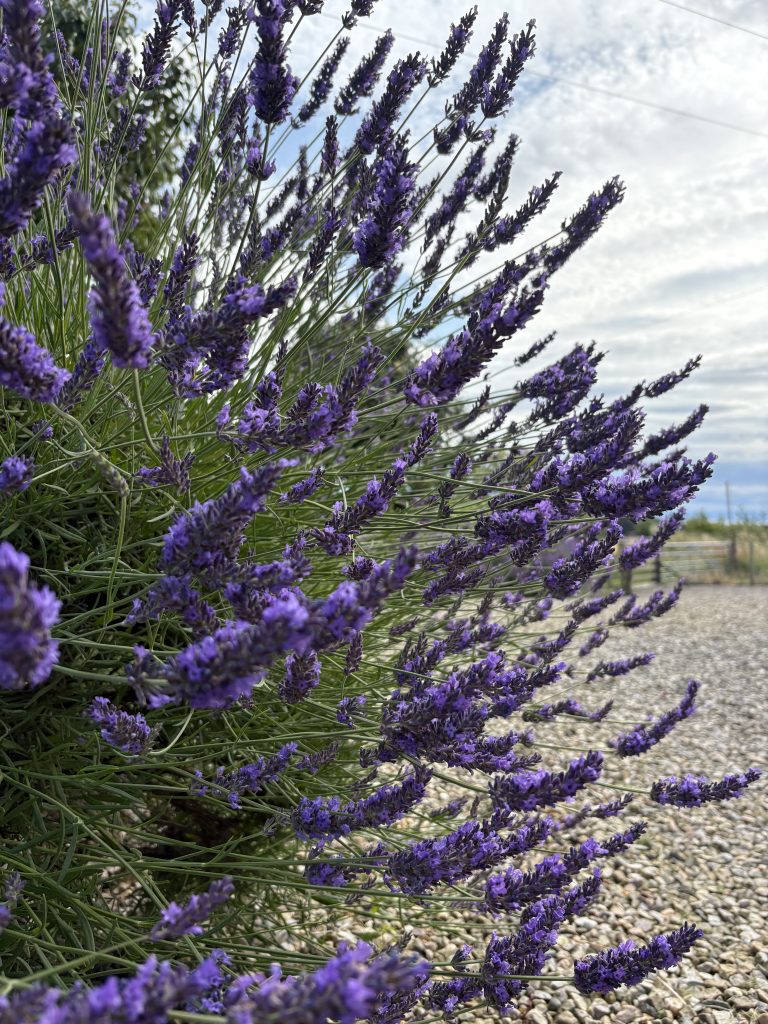
Lavender is my favourite, although my north-facing garden means I can only grow it in pots at the front. Dianthus is another favourite—also sun-loving—so I keep it in terracotta pots by the door. On hot summer days, the scent when I come home is an instant nature and wellbeing experience.
Some plants are tied deeply to my childhood: peonies, phlox, lilac, night-scented stock, irises. They remind me of safety, care, and emotional calm.
Other scents I love include Rosemary, lemon balm, Narcissus, and wild rose. My grandmother used to make rose petal jam—I will never forget it.
Chamomile you can walk on, Corsican mint you can step on, geraniums with aromatic leaves, achillea with an apothecary scent—these are all part of my sensory garden ideas for relaxation and mindfulness.
Touch, Texture and Sensory Experience in the Garden
Touch is just as important in a sensory garden design for wellbeing.
Lamb’s ear is a favourite—soft like my dog’s ears. I love the coolness of Hosta leaves, the delicate texture of dill, and the surprising feel of Gunnera. It looks sharp, but it isn’t—it’s rough and almost playful.
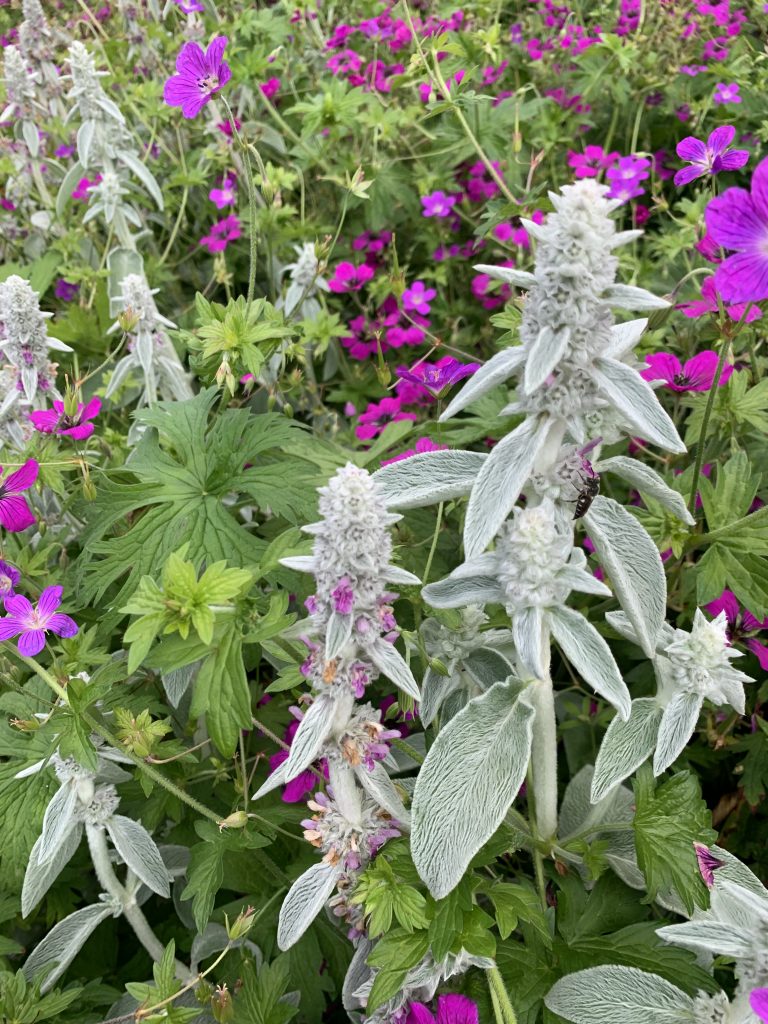
Overall, I am drawn to softness and calming textures.
Eating, Sharing and Small Garden Living
I also eat in the garden—not just from a vegetable patch, but from everywhere. Nasturtium flowers are a favourite, especially for my daughter. Every summer I bring bunches home, and to her they are a delicacy.
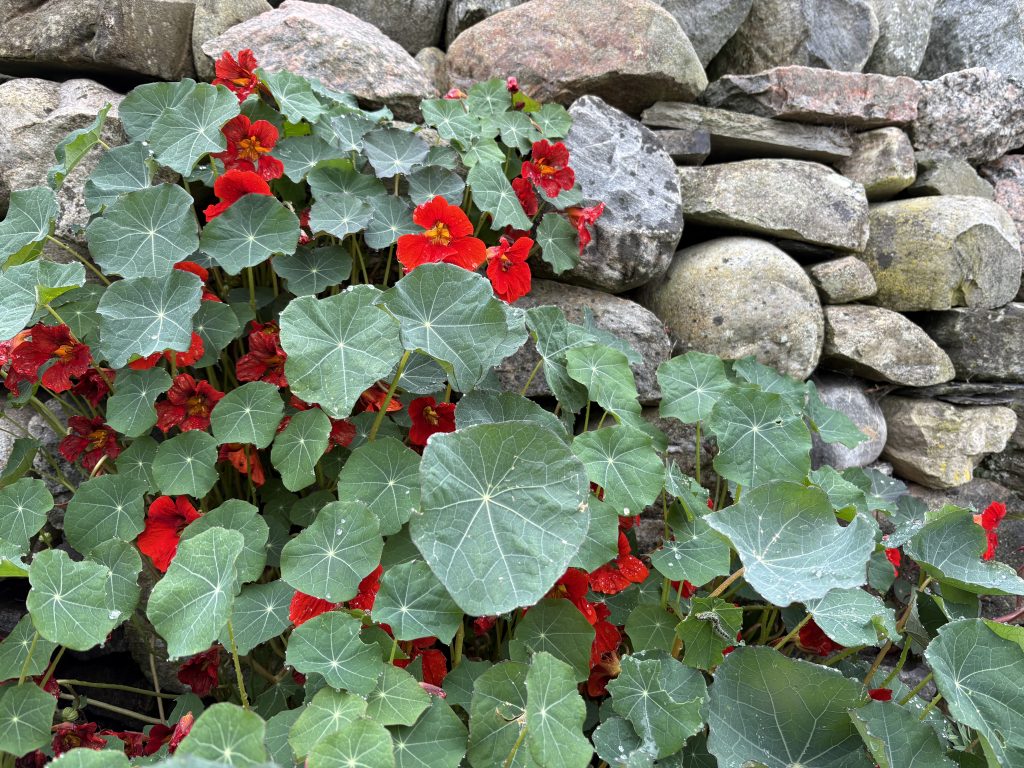
Dill grows among other plants and later becomes part of dried arrangements. Alpine strawberries are fun, though they need managing.
This is what small sensory garden ideas are really about—interaction, not size.
Night Garden – Calm in the Scottish Highlands
I love my garden at night.
Sitting on a bench, looking at the stars—even for five minutes. In the Scottish Highlands, we are sometimes lucky enough to see the aurora, and then it is not just me, but the whole family and even our neighbour standing outside in pyjamas.
We use fairy lights—just a few, enough to create a peaceful atmosphere. This is part of creating a relaxing outdoor space for wellbeing, not constant brightness, just gentle presence.
Colours, Structure and Natural Calm
I find peace in blues, purples, and pinks. Greens—especially blue-green tones—feel grounding. White can feel too strong, though I still dream of a white garden.
Structural plants fascinate me: Sempervivums, Sedums… they are part of a mindful gardening experience, where observation matters more than interaction.
Change, Cycles and Nature Connection
I love watching change—the passing of time.
Seed heads, drying flowers, the full cycle from seed to bloom and back again. Plants like Lunaria, poppies, Nigella, and Scabiosa extend the experience of a therapeutic garden.
Nothing really disappears. It continues.
Small Gardens, Big Sensory Experience
It does not matter how small your space is.
A sensory garden in Inverness or anywhere in the Scottish Highlands can exist even in a window box. With scent, touch, colour, sound, and taste—you can create something meaningful anywhere.
In the end, it is all subjective.
I love Houttuynia cordata—my husband can’t stand it. Just like music, food, or fashion, you don’t have to like what others like.

Final Reflection – How My Work Shapes My Garden
I used to think I was creating a sensory garden.
Now I realise—it has been shaping me all along.
Not just through plants, sound, or seasons, but through the people I meet in my work—their experiences, their needs, their stories.
Each garden I step into, each conversation I have, leaves something behind. A different way of seeing. A deeper understanding of what it means to feel safe, to feel calm, to feel at home.
Slowly, without noticing, it all finds its way back into my own garden—and into me.
It teaches me to slow down, to notice more carefully, to understand what really matters.
And in a world that never really stops, that might be the most important thing a sensory garden in the Scottish Highlands—and the people within it—can offer.